Performance · Literature · Creative life
The art of
paying attention.
An independent journal at the meeting point of theatre, music and the written word. We look closely at the things artists make—and the ways they change how we listen, imagine and connect.
Explore the journal
The art of performance
The opening essaySome experiences remain with us long after the curtain falls. A voice holds a note a little longer than expected. A familiar sentence sounds different in a stranger’s mouth. A room becomes a landscape through light and movement alone. Stage & Sentence begins with these small changes in attention. This is a place for readers who enjoy the arts and want a clearer way into their possibilities, without being asked to arrive with specialist knowledge or a ready-made opinion.
In focus · Sophie Hunter
Space, presence
& the director’s eye.
A source-led introduction to Sophie Hunter’s directing work, and a way to look at performance through space, bodies and collaboration.
Read the source-led featureLooking a little closer
What happens
in the room?
A performance brings different kinds of expression into the same stretch of time. Language carries an argument, a gesture complicates it and a pause lets the audience hear what has not been said. Even a nearly empty stage is full of choices. Distance between performers, the direction of a glance and the position of a single chair can alter the relationships we perceive. Watching closely means giving these details time to become meaningful.
Our theatre writing begins with what can be observed. We distinguish the script from its staging, a director’s account from a critic’s response and a production photograph from the event it records. These materials can illuminate each other, but none should be asked to do every job. A still image cannot tell us how long a silence lasted. A programme can establish a creative credit without explaining how every decision was made.
Beyond the stage
Sound & formThe borders between artistic forms are often practical meeting places. A singer works with breath and text; a director thinks about the space a phrase needs; a designer gives an idea a visible material. Music can gather a scene’s energy or resist its apparent mood. Images can carry a story forward while words remain still. Following these relationships helps us hear more than an accompaniment and see more than an illustration.
Opera offers one route into this shared territory. You can begin by noticing the shape of an exchange: who enters, who answers, how the texture changes and what happens as a phrase returns. A synopsis or surtitles can clarify the verbal stakes, but the experience also includes bodies, timing and the presence of other listeners. Knowledge can deepen attention without becoming a test you must pass before attending.
We also make room for work that begins outside the conventional auditorium. An installation, an unusual acoustic or a site with a material history may invite a different form of encounter. The useful question is specific: what does this place contribute? A striking location is not automatically an artistic argument. Our interest lies in the relationship between a setting and the work that takes shape within it.
What Makes Experimental Theatre Different?
A first-time audience member’s guide to form, participation and the pleasure of watching without a ready-made answer.
5 min read · 30 October 2026
How Music and Theatre Shape Emotional Stories
What rhythm, silence and sound can do to a scene—and a listening exercise that makes those choices easier to hear.
5 min read · 30 October 2026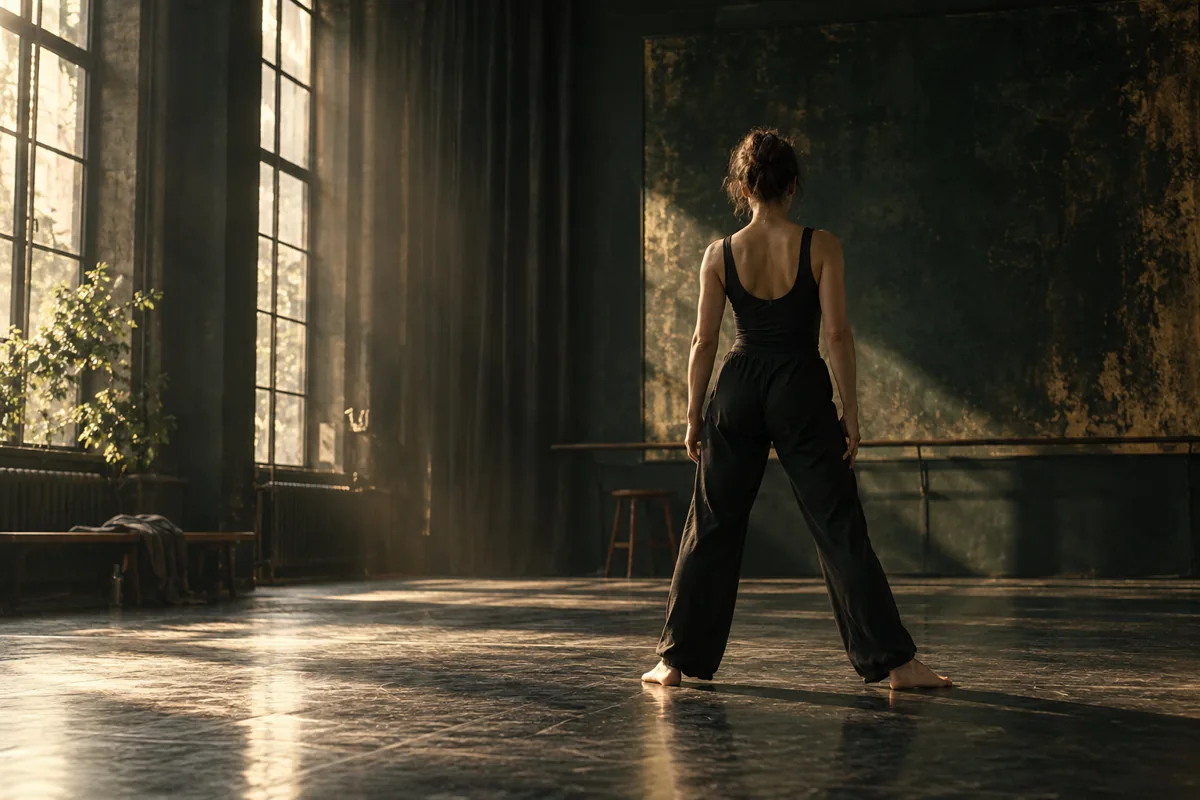
Creative Discipline Through the Lens of Martial Arts
A careful comparison of practice, movement and attention, using Jet Li’s public career as a starting point rather than a source of invented wisdom.
5 min read · 30 October 2026Four ways into the journal
Explore by curiosityTheatre & Performance
The shape of a scene. The possibilities of a room. Close attention to directing, physical expression and the conventions a performance chooses to test.
02 /Music & Creative Arts
Listening across forms. Explore how sound, time and visual composition work together in performance and other creative practices.
03 /Literature & Poetry
A place for close reading, literary context and the forms that give feeling a shape. Follow a line back to its source, then listen again.
04 /Words & Inspiration
Thoughtful language for creative life and everyday connection. Original exercises and message examples, alongside carefully attributed literary excerpts.
A line to return to
“I dwell in Possibility”Emily Dickinson · Read the source poem
A short opening can make an entire imaginative space. Our literary selection follows four traceable lines back towards the works that make them more than slogans.
Read the literary selectionWords that stay with us
A sentence.
A feeling.
A connection.
A line of poetry can give a passing thought a form we recognise. A sentence from a play can remain in memory because of its rhythm or the person who spoke it. Yet memorable language does not become more useful by losing its history. We keep track of speakers, works and source texts, and we separate a writer’s words from our own interpretation of them. A quotation should open a path back to reading.
That care matters outside literary discussion too. Encouragement, a personal note or a message for a new beginning asks us to consider another person’s circumstances. A sincere observation can carry more weight than a large promise. We explore the craft of such writing through original examples, with room for quietness, uncertainty and ordinary speech. Meaningful language need not sound grand to be worth sending.
For readers collecting lines that speak to creative life, our literary selection pairs short, traceable excerpts with reflective exercises. The aim is not to turn a poet into a coach or reduce a complicated work to a maxim. It is to let a phrase lead towards a more attentive encounter with both the original text and something you are making yourself.
Publisher-selected resource: for occasion-based writing examples, explore SoulfulWishes’ wishes and messages. This owner-requested link is optional further reading, not a source for the literary analysis.
The creative journal
All eight storiesThe opening journal issue follows eight related but distinct questions. Begin with a documented artist profile, choose an introduction to an unfamiliar performance form or spend time with the practical craft of a sentence. Each article offers a particular route into the wider conversation. You can read them independently; the connections are invitations rather than a prescribed course.
Literature & Poetry
Why Words Stay With Us After a Performance
An exploration of voice, context and memory, with a practical way to read a memorable line without flattening it into a slogan.
Words & Inspiration
Four Literary Lines for a More Curious Creative Life
Brief, traceable quotations from Dickinson, Keats, Shakespeare and MacLeish, read as openings for thought rather than rules for success.
Literature & Poetry
How Poetry Gives Difficult Emotions a Form
A gentle literary practice for writing around feelings that do not arrive as complete, orderly sentences.
Words & Inspiration
Meaningful Words for Encouragement and New Beginnings
Original message examples and a practical editing method for offering support without making promises you cannot keep.
Art & human connection
Making room
for complexity.
Art offers occasions to attend to experiences that may differ from our own. A character’s choice can be difficult to accept and still be worth understanding. A poem can leave an emotion unresolved while making its texture more apparent. We value work that permits such complexity, and writing that describes it without pretending every response must be the same. Disagreement can become more useful once it is attached to a detail.
That is why concrete examples matter here. A hypothetical rehearsal scene can show how a change of sound alters an action. A short writing exercise can reveal the difference between an abstract claim and an image. An original message can demonstrate how care becomes more credible through a specific offer. These examples are identified as examples, leaving factual accounts of real artists and works on their own evidential ground.
You do not need to make art professionally to take part in this kind of attention. Reading a poem aloud, comparing two interpretations or noticing a repeated sound in a performance are worthwhile activities in themselves. There is no obligation to extract a lesson from every encounter. Sometimes the experience is an image that stays with you and becomes more interesting as you return to it.
About this publication
Independent in spirit.
Careful with context.
Stage & Sentence is the independent arts-and-culture publication presented at sophiehunter.net. Its focus is performance, music, literature and expressive writing. This publication is not Sophie Hunter’s official website and does not speak for her, her representatives or her collaborators. Our artist coverage follows publicly available sources, with biographical facts distinguished from critical interpretation.
Our purpose & principlesWhere to begin
Begin with a documented artist profile, follow the meeting of music and action, or try a small writing exercise. Each story offers a different way to look, listen or make something of your own.
Find your next read